The books we never forget
What 17,052 book grids tell us about the stories that stay with us.
Choose nine books you will never forget. It is a small question with a difficult answer: every place you give to one book leaves another outside the grid. A finished mosaic is a selection made under that constraint, with room for both a familiar favourite and a book almost nobody else picks.
We looked at the first 17,052 finalized My Nine Books grids. They contain 153,468 book choices.
Nine books that keep returning
- 01
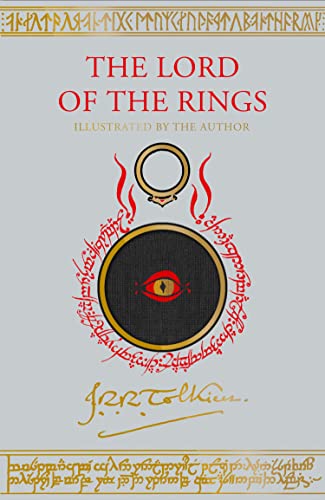
The Lord of the Rings
J. R. R. Tolkien
821grids4.8%4.8% of finalized grids - 02

East of Eden
John Steinbeck
770grids4.5%4.5% of finalized grids - 03

The Brothers Karamazov
Fyodor Dostoevsky
769grids4.5%4.5% of finalized grids - 04

Moby-Dick
Herman Melville
745grids4.4%4.4% of finalized grids - 05

Crime and Punishment
Fyodor Dostoevsky
725grids4.3%4.3% of finalized grids - 06

Jane Eyre
Charlotte Brontë
678grids4.0%4.0% of finalized grids - 07

Pride and Prejudice
Jane Austen
673grids3.9%3.9% of finalized grids - 08

Frankenstein
Mary Shelley
636grids3.7%3.7% of finalized grids - 09

Blood Meridian
Cormac McCarthy
576grids3.4%3.4% of finalized grids
The Lord of the Rings takes first place, while one grid separates second and third place: East of Eden and The Brothers Karamazov are almost tied. The rest of the nine ranges from the social world of Jane Eyre and Pride and Prejudice to the violence of Crime and Punishment, Moby-Dick and Blood Meridian.
Six of the nine are nineteenth-century novels. The three twentieth-century books belong to very different worlds: Tolkien’s imagined history, Steinbeck’s California and McCarthy’s borderlands. Yet all three give their stories the scale of older epics or family chronicles. The list has room for fantasy, social comedy and Gothic fiction, but it repeatedly returns to books that build a substantial world around their characters.
Frankenstein
Mary Shelley
Creating life brings responsibility. Victor’s discovery becomes a tragedy when he abandons the creature he has made.
The Lord of the Rings
J. R. R. Tolkien
Power must sometimes be refused. Defeating Sauron means destroying the Ring, even when it seems to offer a way to defeat him.
The smaller social world of Pride and Prejudice makes room for another kind of difficulty: learning to recognise a mistaken judgment. Elizabeth’s intelligence does not make her immune to getting someone wrong. Across the list, the memorable conflict often reaches inside the character as well as out into the world. A monster, a war or a hostile society can drive the plot, while self-knowledge remains unfinished work.
The books that share a place
Some books come to mind together. A shared concern, a familiar voice or a very different treatment of the same question can make one a natural companion to another. Looking at the books chosen in the same mosaic gives us a starting point for those comparisons.
Blood Meridian
Cormac McCarthy
Moby-Dick
Herman Melville
Obsession and violence drive both journeys. Ahab pursues a whale; McCarthy’s riders devastate the borderlands. Melville’s restless, digressive voice and McCarthy’s biblical prose give that destructive ambition different forms.
Pride and Prejudice
Jane Austen
Jane Eyre
Charlotte Brontë
Love and independence depend on money. Elizabeth navigates class and family expectations; Jane negotiates an unequal relationship. Austen works through social comedy, while Brontë gives her heroine a close, first-person voice.
The Brothers Karamazov
Fyodor Dostoevsky
East of Eden
John Steinbeck
Family history puts freedom to the test. The Karamazovs argue over belief and responsibility; Steinbeck returns to Cain and Abel across generations. Both ask whether inherited conflict has to be repeated.
When a connection is unusually strong
Two ways a pair can stand out
Blood Meridian + Moby-Dick
Little Women + Anne of Green Gables
Popular books have more chances to appear together. To see which pairs stand out beyond that advantage, we compare their shared grids with the count expected if the two books were chosen independently, keeping their individual popularity the same.
The most frequently shared pair is not the strongest relative association. Blood Meridian and Moby-Dick lead by shared grids, but Little Women and Anne of Green Gables stand out more once their individual popularity is taken into account. The raw count points to a widely shared connection; the multiplier brings a less prominent pair to our attention.

Little Women
Louisa May Alcott

Anne of Green Gables
Lucy Maud Montgomery
Growing up with imagination and ambition. Little Women and Anne of Green Gables make family obligations and the wish to belong part of a girl’s search for the life she wants.

2666
Roberto Bolaño
Gravity's Rainbow
Thomas Pynchon
2666 and Gravity’s Rainbow spread the story across many lives. Their large casts and fractured narratives connect people through war and violence, asking the reader to follow links that no single character can explain.

Babel
R. F. Kuang

The Secret History
Donna Tartt
Learning comes at a cost in Babel and The Secret History. Both make an exclusive academic circle seductive, then turn belonging into a question of secrecy, loyalty and complicity.
Baseline = grids containing A × grids containing B ÷ 17,052. Multiplier = observed ÷ baseline. Every pair shown appears in at least 30 grids.
Explore the top 100 affinitiesThe nine authors who appear most often
Fyodor Dostoevsky
J. R. R. Tolkien
John Steinbeck
Cormac McCarthy
Jane Austen
Stephen King
George Orwell
Herman Melville
C. S. Lewis
Melville’s presence is concentrated in Moby-Dick; Tolkien’s is spread more widely. One novel accounts for almost all Melville’s mosaics. Tolkien’s readers reach much further into his work, so his place in the author list depends on more than The Lord of the Rings.
How much comes from the leading book?
745 of 781 author mosaics contain Moby-Dick.
821 of 1,515 author mosaics contain The Lord of the Rings.
King, Orwell and Lewis reach the author top nine without a book in the title top nine. Their presence is spread across several titles.
The two lists also give a different place to women. Jane Austen, Charlotte Brontë and Mary Shelley each have a book in the top nine, while Austen is the only woman in the author top nine. Brontë and Shelley’s leading novels secure a place in the book list; Austen also returns through other books. The comparison draws attention to how strongly a writer’s presence can be concentrated in one title.
As a reading list, these nine authors would move between very different voices. Austen’s social comedy sits alongside King’s horror; Orwell’s political fiction alongside the imagined worlds of Tolkien and Lewis. Their neighbours in the ranking need not be neighbours in style. An author list gives room to those differences in a way that a single book pairing cannot.
Each author counts once per mosaic, even when several of their books are chosen. That puts McCarthy just above Austen, with 1,051 mosaics against 1,044, although Austen has slightly more book mentions: 1,119 against 1,117. The ranking follows how many mosaics an author reaches, while the second count shows how many of their books those selections contain.
There is plenty of room beyond the favourites
The Lord of the Rings appears in 4.8% of grids, fewer than one in twenty. First place gives it a prominent position in the ranking, but it is absent from the great majority of selections. There is no book that most mosaics agree on.
The top nine together account for about 4.4% of identified book appearances. Expanding the list to thirty titles brings that share to 10.5%. A reader browsing only the leaders would still encounter a small part of what people chose.
How often does an entry appear?
- Once26,605
- 2–5 times9,115
- 6–20 times2,638
- 21–100 times775
- 101+ times161
The entries chosen once put a different kind of significance beside popularity. A single appearance can still mean a great deal to the person who chose the book. It gives the title little weight in a collective ranking, but it has already survived that reader’s decision about which nine to keep.
The shared favourites and the rarely repeated choices belong in the same portrait. A familiar novel can sit beside a book that almost nobody else includes. The ranking offers common reference points; the rest of the collection is where each selection can take a less familiar direction.
Fiction or non-fiction?
of classified book appearances are fiction
- Fiction
- 103,52773.4% of classified appearances
- Non-fiction
- 37,61326.6% of classified appearances
All nine leading books are fiction. Imagined stories give this selection its most visible common ground, while the non-fiction books below turn to belief, daily conduct and the freedom to write.
Three non-fiction books readers chose
- 257mosaicsView recorded choices ↗

Confessions
Augustine of Hippo
- 98mosaicsView recorded choices ↗

Meditations
Marcus Aurelius
- 85mosaicsView recorded choices ↗

A Room of One’s Own
Virginia Woolf
The non-fiction entries give the selection another strand of self-examination. Confessions, Meditations and A Room of One’s Own approach the life of the mind from different directions: a person looking back over his life and belief, someone working through the discipline of living, and a writer examining the material conditions needed to write.
An unforgettable book can be an argument as well as a story. These three works bring ideas close to an individual life. They ask how a person understands themselves, how they act, or what freedom they have to do their work. Their smaller counts give them less space in the overall ranking, but they add a different way for a book to become personally important.